Back to Blog

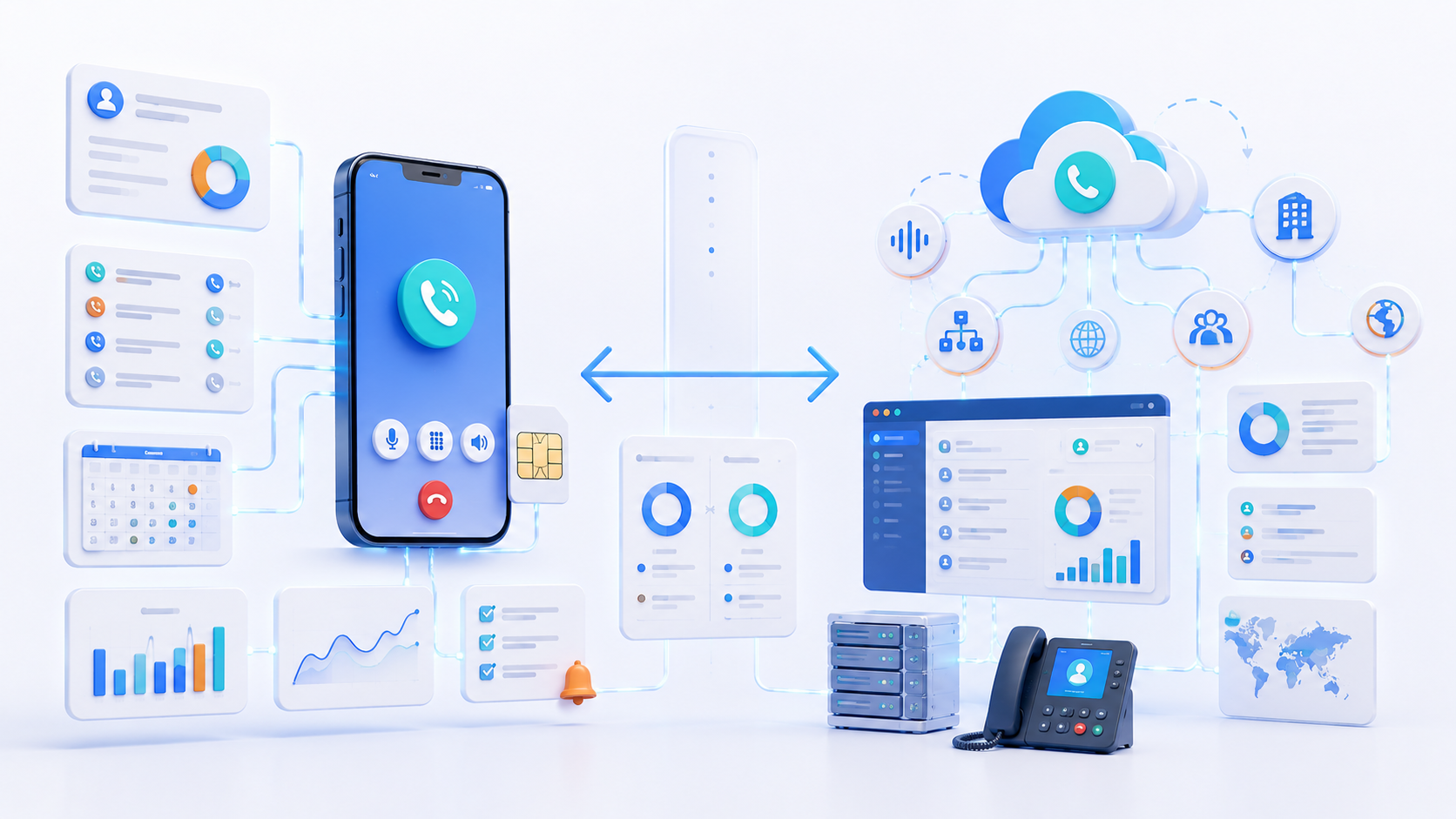
SIM-Based vs Cloud Telephony for Sales Teams
Callytix Team · June 19, 2026 · 5 min read
SIM-Based vs Cloud Telephony for Sales Teams

Introduction

Choosing the right phone system is one of the most important decisions for any sales team. While cloud telephony has become popular in recent years, many businesses in India still rely on mobile SIM-based calling because it feels more natural to customers and often delivers higher pickup rates.

The right solution depends on your team's workflow, budget, customer base, and reporting requirements. If your goal is simply to centralize phone numbers, cloud telephony may be suitable. But if your team already uses company or personal mobile numbers and you want powerful call analytics without changing how they work, SIM-based call tracking is often the more practical choice.

This guide compares both approaches and explains when each one makes sense.


Why Your Calling System Matters

Your phone system affects much more than making calls.

It influences:

  • Customer pickup rates

  • Sales representative productivity

  • Reporting accuracy

  • Team adoption

  • Operating costs

  • Lead tracking

  • Manager visibility

Choosing the wrong solution can introduce unnecessary complexity and reduce adoption across the sales team.


What Is Cloud Telephony?

Cloud telephony (also known as VoIP calling) routes business calls over the internet instead of traditional mobile networks.

Sales representatives usually place calls using:

  • Desktop applications

  • Web browsers

  • Softphone software

  • Dedicated mobile apps

The system assigns virtual business numbers, and all calls pass through the cloud platform.

Advantages

  • Centralized business phone numbers

  • Built-in call recording

  • Easy call routing and IVR

  • Suitable for customer support teams

  • Useful for distributed contact centers

Limitations

  • Representatives must use a separate dialer

  • Internet quality affects call quality

  • Customers may hesitate to answer unfamiliar virtual numbers

  • Monthly licensing and per-minute charges can increase costs

  • Requires training and process changes

Cloud telephony works well for organizations that prioritize centralized communication and customer support operations.


What Is SIM-Based Call Tracking?

SIM-based call tracking allows representatives to continue using their existing mobile numbers while automatically syncing call activity to a central dashboard.

Instead of replacing the calling process, the software works in the background.

Representatives simply:

  1. Open their existing contact or lead.

  2. Make the call using their normal mobile number.

  3. Complete the conversation.

  4. The app automatically syncs call details with the CRM.

No new dialer or workflow changes are required.


SIM-Based vs Cloud Telephony

Feature

SIM-Based Call Tracking

Cloud Telephony

Existing Mobile Numbers

✅ Yes

❌ Usually No

Workflow Changes

Minimal

Moderate

Internet Required for Calls

No

Yes

Call Analytics

✅ Yes

✅ Yes

Customer Trust

Higher (known numbers)

Can be lower (virtual numbers)

Setup Complexity

Low

Medium to High

Field Sales Friendly

Excellent

Limited

Call Recording

Device dependent

Usually built-in

Offline Calling

Yes

No

Neither option is universally better—the right choice depends on how your team operates.


When SIM-Based Calling Makes More Sense

SIM-based call tracking is often the better choice if:

  • Your team already uses company or personal mobile numbers.

  • Building trust through familiar caller IDs is important.

  • Representatives work in the field rather than a fixed office.

  • You don't want to replace existing calling habits.

  • You need analytics without investing in a full cloud phone system.

  • Your business operates across multiple cities with mobile-first teams.

For many growing sales organizations, this approach delivers the benefits of call tracking while keeping adoption simple.


When Cloud Telephony Is the Better Choice

Cloud telephony may be more suitable if your business requires:

  • A single centralized business number

  • Interactive Voice Response (IVR)

  • Automatic call distribution

  • Customer support queues

  • Multi-level call routing

  • Large inbound support operations

Businesses running dedicated call centers often benefit from these advanced communication features.


Common Mistakes When Choosing a Solution

Many businesses choose a phone system based solely on features rather than how their sales team actually works.

Avoid these common mistakes:

  • Forcing representatives to learn a completely new dialer.

  • Ignoring customer pickup behavior.

  • Choosing expensive platforms with unused features.

  • Focusing only on call recording instead of productivity.

  • Overlooking mobile and field sales requirements.

The best system is the one your team consistently uses.


How Callytix Helps

Callytix is designed specifically for businesses that want the benefits of call analytics without replacing their existing mobile calling process.

With Callytix, your team can:

  • Continue using existing SIM cards and mobile numbers.

  • Automatically sync call logs to a centralized dashboard.

  • Link every call to a lead or customer record.

  • Capture structured after-call outcomes.

  • Monitor team productivity in real time.

  • Manage follow-ups without manual spreadsheets.

Representatives keep the workflow they already know, while managers gain complete visibility into sales activity.


Frequently Asked Questions

Is SIM-based call tracking better than cloud telephony?

Neither solution is universally better. SIM-based call tracking is often preferred for mobile-first sales teams that want to keep using their existing phone numbers, while cloud telephony is better suited for centralized customer support operations with advanced routing needs.

Does SIM-based call tracking require a new phone number?

No. Representatives continue using their existing company or personal mobile numbers, while the app automatically syncs call activity with the dashboard.

Does cloud telephony always provide call recording?

Most cloud telephony platforms include built-in call recording, but features vary by provider and subscription plan.

Which solution is better for field sales teams?

SIM-based call tracking is generally more practical because representatives can continue calling normally from their mobile devices without relying on a separate dialer or internet-based calling.


Conclusion

Both SIM-based call tracking and cloud telephony have their strengths, but they solve different business problems.

If your organization needs centralized phone infrastructure, IVR, and call routing, cloud telephony may be the right choice. However, if your priority is improving sales productivity while keeping your team's existing mobile workflow intact, SIM-based call tracking offers a simpler and more cost-effective solution.

Callytix combines automatic SIM-based call tracking with lead management, analytics, and after-call workflows, giving sales managers complete visibility without disrupting how representatives already work.

Start your free 15-day Callytix trial today and discover how effortless SIM-based call tracking can be for your sales team.

Try Callytix Free for 15 Days

Track calls, manage leads, and measure team performance — no credit card required.

Start Free Trial

Callytix Assistant

We typically reply within 24 hours

👋 Welcome to Callytix!

Let's get to know you first. We'll reach out to you soon!

By continuing, you agree to our Terms and Privacy Policy